AI voice agents: where they work, and where they should not
An honest map of what call automation handles well in 2026, what it still handles badly, and the disclosure rules you cannot skip.
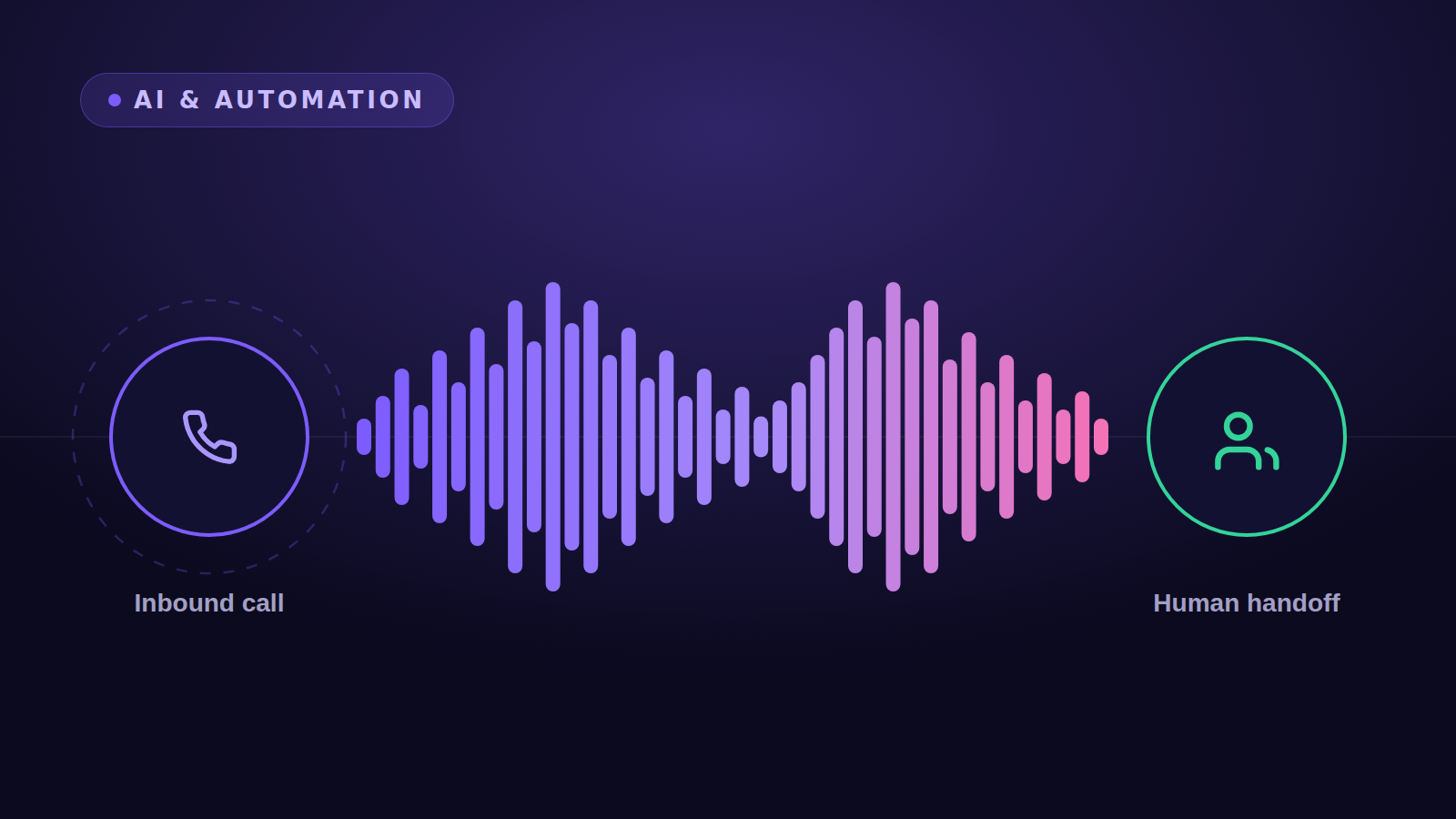
Voice AI got good quickly. Latency is low enough for natural conversation, interruptions are handled, and most callers will not clock it in the first ten seconds. That capability has arrived alongside a wave of vendors overselling it, so it is worth being precise about the boundary.
Where it genuinely works
- Out-of-hours cover. The alternative is voicemail, and voicemail loses the caller to whoever answers next.
- Overflow. Calls three and four while your team is on one and two.
- Appointment booking. A well-defined task against live calendar availability — this is the strongest single use case we deploy.
- Qualification. Asking the same six questions consistently and routing accordingly. Machines are better at consistency than tired humans on a Friday afternoon.
- Speed to lead. Calling a web enquiry within a minute. Contact rates fall off a cliff after five.
Where it should not be used
We turn down parts of scope regularly, and these are why:
- Complaints. An upset customer wants to be heard by a person. Automation reads as a brush-off and escalates the anger.
- Vulnerable callers. Distress, confusion, health or financial difficulty — these need judgement the model does not have.
- Anything with real consequence. Medical guidance, legal positions, credit decisions, safety-critical instructions.
- Complex negotiation. If price and terms are genuinely being agreed, a person should do it.
The design pattern that works is confident handling of the routine, and fast escalation of everything else. Set escalation triggers generously; the cost of an unnecessary handoff is trivial next to the cost of a mishandled call.
Disclosure
Tell people. Our agents identify themselves as an automated assistant in the opening line, before anything else happens.
Recording requires notice and, in practice, consent. Under UK GDPR the caller has rights over the recording and anything extracted from it, so retention needs a defined period and your privacy notice needs to describe it.
Beyond compliance, there is a plain commercial argument. A caller who discovers mid-conversation that they were misled trusts you materially less than one who was told upfront. Disclosure costs you almost nothing and protects the thing that is hardest to rebuild.
The right question is not “can AI take this call?” — increasingly it can. It is “should this particular call be taken by a machine?” Those are different questions and only one of them is about technology.